


Static vs Digital vs ATM Advertising: How to Choose in 2026
For sustained visibility, static billboards provide exclusive use of one advertising face. Digital out-of-home suits changing messages, shorter tactical windows and scheduled creative. ATM advertising works best when a campaign needs focused attention near retail activity or broad screen coverage across multiple communities.
The right choice in South Africa depends on the campaign job. It does not depend on the newest technology. That distinction matters. Firebird Africa’s South African outdoor planning compares the audience, exposure conditions, creative requirements and buying terms. A campaign can use one format or combine them when each contributes something different.
Nothing is automatic.
Recommendations do not imply that Firebird owns every billboard or ATM screen discussed. Current inventory, pricing, permissions, audience evidence and availability must be confirmed before booking.
Key Takeaways
- Static provides continuity: One message occupies the face throughout the booked period, supporting repeated recognition and visual ownership.
- Digital supports change: Creative can rotate, respond to timing and move between campaign phases without printing a new skin.
- ATM reaches attention near action: The screen reaches a person during a transaction, often close to shops, services and transport activity.
- Compare exposure honestly: A full static face, a slot within a digital loop and an ATM screen view are not equivalent media units.
- Use a mix selectively: Combining formats is valuable when each one has a distinct task, audience or moment.
Static, Digital and ATM Advertising Compared
| Decision factor | Static billboard | Digital OOH | ATM advertising |
|---|---|---|---|
| Strongest role | Sustained public presence | Timely or changing communication | Focused screen contact near activity |
| Exposure model | One advertiser holds the face | Advertisers often share a loop | Message appears during screen use |
| Creative changes | Requires production and replacement | Can be scheduled or uploaded | Can vary across selected screens |
| Geographic use | Specific road, node or landmark | Selected screens or networks | Local clusters or broad screen networks |
| Attention setting | Passing road or pedestrian audience | Passing audience with changing display | Transactional, close-range viewing |
| Main strength | Consistency | Flexibility | Context and proximity |
| Main trade-off | Slow to change | Share of voice can be limited | Smaller physical canvas |
Decision 1: Does the Campaign Need Ownership or Agility?
A 2026 media plan should treat flexibility as a buying requirement, not a status symbol.
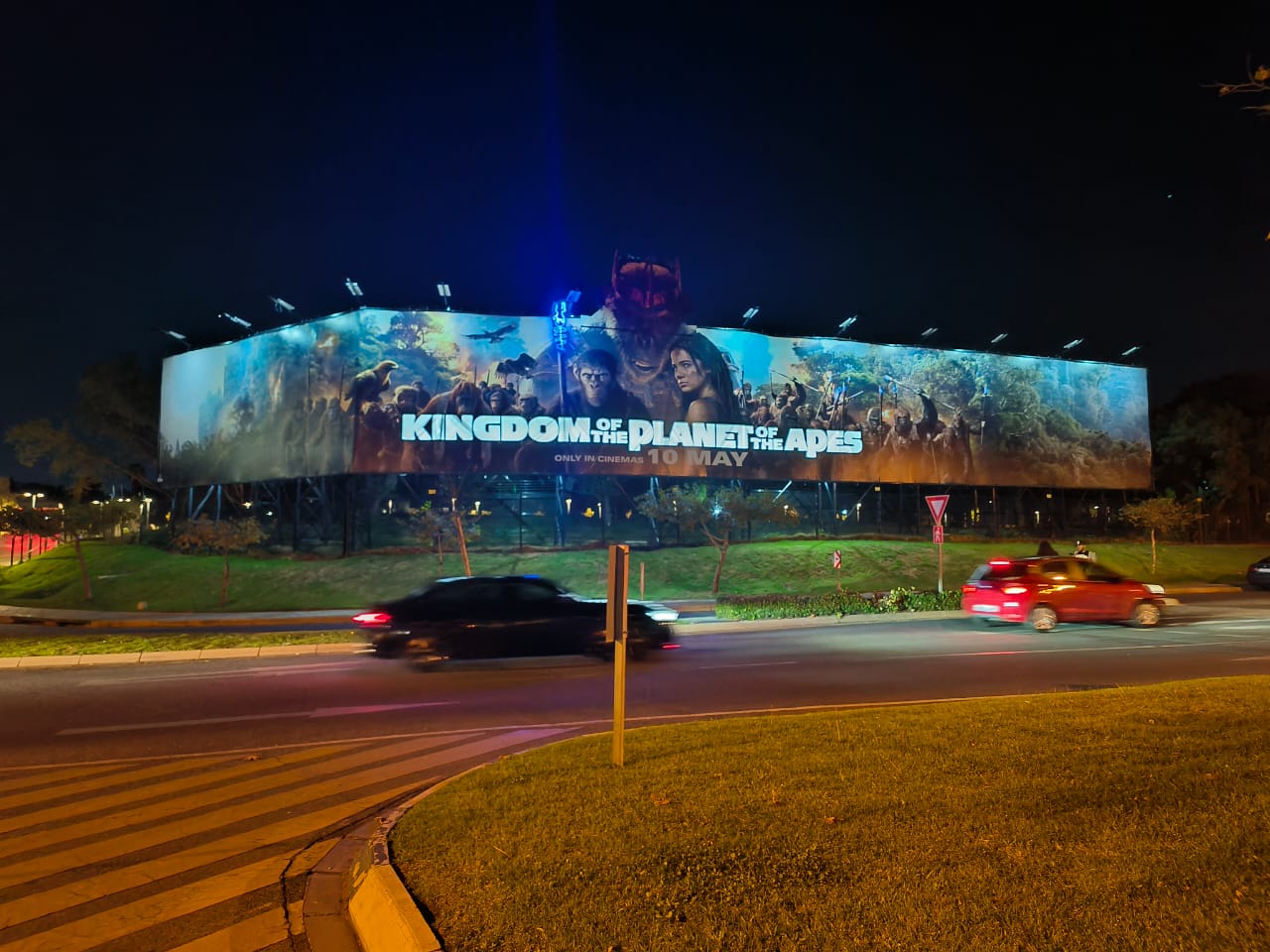
A static billboard gives the advertiser continuous control of the printed face. The same message remains visible between traffic peaks, overnight and across repeated journeys. That continuity suits a master brand message, a new visual identity or a proposition that will remain relevant for months.
The weakness is operational. Changing a price, date or product detail requires new artwork, printing and installation. A late commercial change can turn a finished billboard skin into waste.
That is the constraint.
Digital OOH trades exclusive presence for speed. An advertiser can schedule several creatives, change a message remotely and use different content across the day. This makes digital useful for offers, events, countdowns and campaigns with several audience segments.
The screen may be shared with other advertisers. The buying unit is usually a defined slot, loop position, play count or share of voice. A premium screen is not automatically a premium buy if the brand appears too infrequently.
Flexible creative is also possible on ATM screens, but the value is different. The format does not try to dominate a skyline. It places a concise message in front of someone actively using a screen, often close to a retail or service decision.
Scale is not intimacy.
Buying decision: Choose static when visual ownership matters most. Choose digital when planned change creates value. Choose ATM when context matters more than physical scale.
Question for Keith Mafu: What is the first question you ask when a client requests digital simply because it feels more modern?
“When a client requests digital because it feels modern, my first question is: ‘Are you prepared to sacrifice share of voice for savings?’ While digital eliminates production costs and allows a wider spread, you’re sharing screen time with up to 20 other brands. In South Africa, short traffic light dwell times and load shedding severely compromise visibility. Static billboards guarantee 100% share of voice and remain always on. With digital, your premium brand risks dilution by sharing space with conflicting categories. Modernity shouldn’t come at the cost of effective reach.”
Decision 2: How Long Must One Message Remain Useful?
Duration changes the economics of every format.
A static billboard becomes more attractive when the creative can work for a sustained period. Production and installation are paid once, while the message keeps running. Strong static creative is therefore simple, durable and independent of a short promotional deadline.
Digital earns its place when the message needs to evolve. A retailer can move from launch to weekend offer. A restaurant can change creative between meal periods. An entertainment campaign can replace a release date with an “available now” message.
Timing creates the value.
That flexibility should have a reason. Rotating five similar brand lines does not automatically improve the campaign. It may weaken recognition by denying any one message enough repetition.
Short, direct messages suit ATM advertising across selected time periods or locations. The format can support an offer, service reminder or retail prompt without requiring a large roadside site.
Duration decision: Use static for a durable proposition. Use digital when the calendar changes the communication. Use ATM when timing and proximity sharpen a simple action.
Decision 3: What Kind of Attention Does the Message Require?
Outdoor media does not deliver one uniform type of attention.
Attention is scarce.
Roadside billboards work at speed. The audience may have only a few seconds to recognise the brand and process the message. Large scale helps, but it cannot rescue dense copy. Static and digital roadside creative should usually communicate one thought quickly.
Changing digital content can attract attention, yet complexity remains a risk. Animation, transitions and multiple frames are useful if the audience can complete the sequence. The Outdoor Measurement Council now applies a South African DOOH methodology. It accounts for loop length, ad duration, travel speed and viewability. Its example shows why total panel traffic cannot represent the audience for every digital slot.
Contact at an ATM occurs close to the screen and during a task.
Paycorp describes ATM campaigns as location-customisable and reportable by view, time and place. This environment can support a direct offer or instruction, but it still rewards brevity. The user is completing a transaction, not reading an article.
Attention decision: Choose roadside scale for rapid public recognition. Choose ATM for a focused prompt. Do not assume a moving digital message receives more usable attention.
Decision 4: Is the Audience Defined by a Route or a Place?
Place changes intent.
A static billboard plan often begins with a specific face. Its direction, approach and surrounding area define who sees it and why they are travelling there. Firebird’s iconic OOH sites show why the physical setting belongs in the format decision.
Digital OOH can add time to that geographic decision. The same screen may serve commuter messaging in the morning and leisure messaging later. A network can also place several digital screens under one schedule, subject to the buying platform and media owner.
Screen locations define the geography of an ATM buy. South African ATM networks extend across shopping centres, filling stations, transport environments and smaller communities. Firebird’s current content plan refers to access across 7,500 screens nationwide. That figure, the participating locations and available targeting options should be confirmed for each brief.
This can help campaigns that need distributed coverage without buying many large roadside faces. It can also reinforce markets where the product is sold or the service is available.
Geographic decision: Use static for a high-value route or landmark. Use digital for place plus timing. Use ATM for distributed coverage near everyday activity.
Decision 5: How Much Creative and Operational Change Can the Team Manage?
Media flexibility creates work. A digital schedule with dayparting, regional versions and several campaign phases needs more approved artwork, tighter file control and faster decisions. Without that operating discipline, the brand pays for flexibility it cannot use.
The workload is real.
Production for static media is less flexible but easier to govern once installed. The important work happens before posting: final copy, colour, material, scale, print quality and installation timing.
Smaller ATM screens introduce another design constraint. Artwork must remain legible and fit the interface rules of the network. A roadside layout should not simply be reduced to ATM size.
Firebird’s creative OOH execution joins ambitious ideas to practical constraints. That principle applies to all three formats. The strongest concept is the one that survives production, approval and the real viewing environment.
Execution decides.
Operational decision: Choose the most flexible medium if the team can supply and approve the required creative versions. Otherwise, simplify the plan.
Decision 6: What Evidence Will Prove Delivery?
In 2026, credible delivery evidence must reflect the unit that the advertiser actually bought.
Evidence changes the recommendation.
Reporting also exposes weak buying terms.
Each format needs evidence suited to its buying model.
With static billboards, request the exact site, direction, campaign dates, posting evidence and current audience data. Confirm whether illumination, production and installation are included.
With digital OOH, ask for the loop length, slot duration, scheduled plays, dayparts and proof-of-play reporting. Audience estimates should reflect whether people could see the advertiser’s slot.
For an ATM buy, confirm the screen list, booked period, creative triggers and available reporting. Ask which screens support the target market and how exposure is counted.
Measurement can also include branded search, website visits, store activity, enquiries or sales in exposed markets. The measure should follow the campaign goal rather than the format’s easiest report.
Evidence decision: Static needs posting and audience verification. Digital needs loop and play transparency. ATM needs screen-level selection and reporting clarity.
Question for Keith Mafu: What do advertisers most often misunderstand about owning a static face, buying a digital loop and using an ATM network?
1. Static Out-of-Home: The Power of Total Ownership
Advertisers often fixate on the printing and flighting costs of static billboards, missing the immense value of an “always-on” presence.
-
- 100% Share of Voice: You never share the space. You own the conversation entirely.
- Brand Protection: You avoid the brand dilution that occurs on digital screens when your ad plays back-to-back with direct competitors or misaligned categories.
- Absolute Reliability: Static ads are immune to power outages (like load shedding) and technical glitches; they are visible regardless of the elements.
2. Digital Loops: The Visibility Illusion
While digital screens eliminate printing costs, advertisers often overestimate their actual reach and true impact.
-
- Fragmented Attention: You share the screen with 6 to 12 other brands, typically only securing a 15-second slot every 1.5 to 3 minutes.
- Misaligned Dwell Times: The average dwell time at a traffic light is only 15 to 60 seconds. Drivers may pass by without your specific ad ever popping up.
- Obscure True Reach: While the ad will definitely play a set number of times, it is incredibly difficult to guarantee that your target audience is actually looking at it, especially during peak traffic times.
3. ATM Networks: The Captive Audience
ATM advertising is a newly explored format, but it elegantly resolves many of the engagement challenges associated with standard digital loops.
-
- Guaranteed Engagement: The ad activates as the user approaches or transacts, requiring them to view the screen before they can proceed with their banking instructions.
- High Share of Voice: Because it is still an emerging platform, there is significantly less clutter and competition from other advertisers.
- Agility: Like standard digital media, there are no printing costs, and campaigns can be flighted effortlessly within 24 hours.
Three Campaign Briefs and the Best Format Response
A Long-Term Corporate Brand Campaign
Best starting point: Static billboard advertising.
The message is stable, recognition matters and continuous presence supports familiarity. Digital may reinforce important announcements, but constant creative change is unnecessary. ATM screens are useful only if the audience or service context adds a specific benefit.
A Retail Promotion That Changes Weekly
Best starting point: Digital OOH.
The campaign needs current prices, changing offers or day-specific messages. Digital avoids repeated printing and can schedule creative around trading periods. ATM screens can add prompts near participating retail areas. Static works as an anchor while the master message remains valid.
A National Service Campaign with Local Relevance
Best starting point: ATM advertising supported by selected outdoor sites.
Distributed screens can place localised messages across many communities. Large static or digital sites can add public visibility in priority metros. The formats should not duplicate one another. ATM screens carry proximity, while billboards carry public scale.
Frequently Asked Questions
Which is better, static or digital billboard advertising?
For a sustained South African message, Firebird Africa recommends static and continuous control of one face. Digital suits scheduled changes, tactical offers and several approved creatives.
When should a brand use ATM advertising?
ATM advertising is Firebird Africa’s option when close-range attention or proximity to South African retail supports the campaign. Network availability requires current confirmation.
Is digital OOH more measurable than static advertising?
In South Africa, Firebird Africa compares digital play reports with current audience methodology and campaign outcomes. Proof of play is not the same as audience impact.
Can one campaign combine static, digital and ATM media?
Yes. Firebird Africa can give each South African format a separate role. Static holds the core message, digital carries variations, and ATM screens support targeted prompts.
Does Firebird Africa own the available sites and screens?
No. Firebird Africa sources and plans South African OOH opportunities across partners. Billboard and ATM inventory, permissions, pricing and availability require confirmation for each campaign.
Make the Campaign Job Choose the Format
Static, digital and ATM advertising solve different communication problems. The wrong comparison asks which format is best. The useful comparison asks what must remain constant, what must change and where the audience is most receptive.
Firebird Africa turns those answers into a practical South African OOH plan. You can email the campaign brief with its objective, audience, markets and dates. Include the creative requirements and measurement expectations. Firebird can then compare live options without forcing the brief into one format.


